 10 months ago
161
10 months ago
161
In today’s modern software development landscape, many organizations are migrating to the cloud and adopting DevSecOps processes. However, this transition presents a significant challenge: a proliferation of tools and legacy systems not designed for modern development. To adapt these systems to DevSecOps, organizations must create integrations between multiple tools for task management, CI/CD, security, monitoring, and more. The result? Operational complexity, high maintenance costs, and disrupted collaboration between development and operations teams. Additionally, developers experience frustration as they constantly switch between different tools to complete a single development flow – from planning to production.
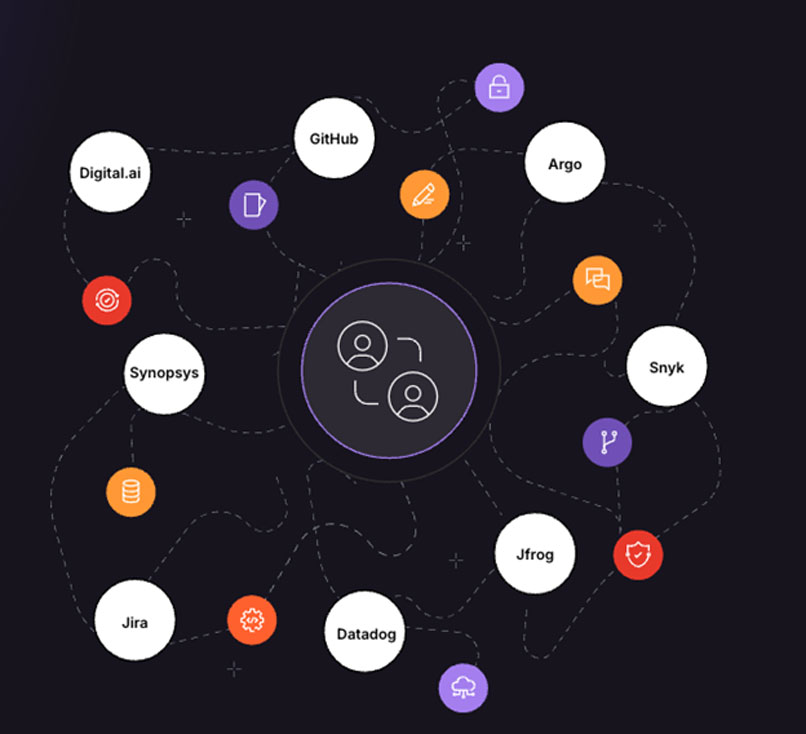
The good news is that a solution exists: A comprehensive DevSecOps platform offering a unified approach to software development.
These platforms are built for organizations operating in cloud-based and DevSecOps environments, consolidating all software development stages — from code management, CI/CD processes, task management, and security to AI-driven automation — into a single platform. Centralizing all software development workflows in a unified interface enables development and operations teams to work more efficiently, streamline communication, and minimize operational complexities and disruptions.
Furthermore, the developer experience significantly improves — engineers are much happier working with a product designed specifically for modern development needs.
In the sections below, we’ll explore how GitLab helps teams overcome common challenges — whether it’s managing projects and tasks, ensuring security and compliance, or adopting AI-powered development tools – all within a single, unified platform.
Integrated Agile project management
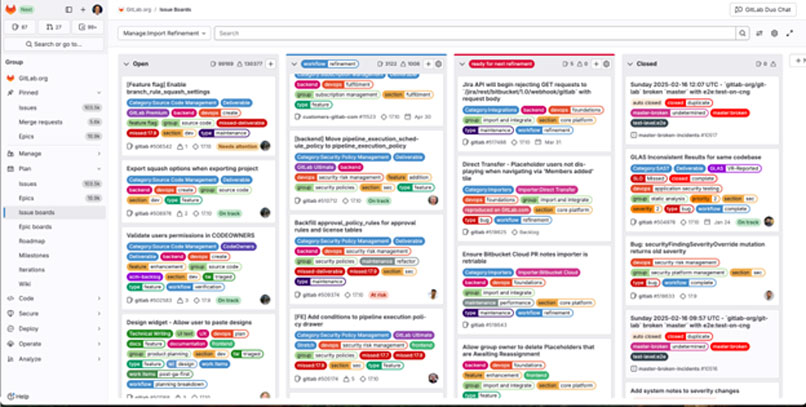
GitLab provides a holistic solution in which project and task management are fully integrated across all stages of the software development lifecycle, such as CI/CD, enabling real-time tracking of development progress. Issues and epics directly link to automation processes, allowing a seamless flow from planning to production deployment. This approach enhances transparency across teams, reduces delays, and ensures that all stakeholders have a clear view of the development status in real-time.
Built-in security
GitLab strongly emphasizes integrating security capabilities end-to-end (security first). The platform integrates a wide range of automated security scanners, including:
- Dependency Scanning
- Static Application Security Testing (SAST)
- Dynamic Application Security Testing (DAST)
- Secret Detection
- Container Scanning
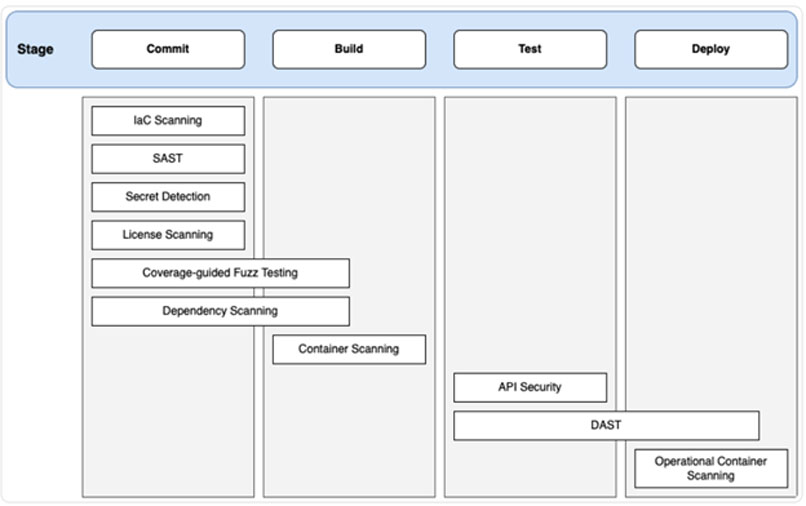
These security checks are built directly into every phase of the software development lifecycle, including the CI/CD pipeline, to provide developers with immediate feedback on potential security issues early in the development cycle.
Compliance and regulatory requirements
Beyond efficiency and user experience, many organizations — especially those in regulated industries such as financial institutions or large enterprises — must ensure their processes comply with strict security and compliance standards. They need the ability to enforce policies for different projects, such as mandating a security scanner every time a CI/CD pipeline runs on specific code branches (e.g., main or protected branches) or requiring specific approvals before merging code into the main branch.
With GitLab, this becomes easier through Compliance Frameworks, a feature that allows organizations to define and enforce structured policies for selected projects. This ensures compliance with automatic regulatory and security requirements while maintaining a seamless and efficient developer workflow.
AI-powered development
GitLab Duo provides AI-driven assistance across all development stages, eliminating the need to switch to external tools. Every AI-powered request is processed within the full context of the project and codebase, enabling smarter and more efficient work.
AI can perform example tasks such as:
- automatic task description generation
- smart summarization of issue discussions, saving developers valuable time
- advanced code review capabilities
- code improvement and optimization suggestions
- automated test generation
- security vulnerability detection and remediation
- troubleshooting root cause analysis for CI pipeline failures
- privacy and Data Security
Understanding the needs of regulated organizations, particularly in the public and financial sectors, GitLab offers a unique solution for running AI models in a secure environment. GitLab Duo Self-Hosted enables organizations to maintain full control over data privacy, security, and the deployment of large language models (LLMs) in their own infrastructure, ensuring:
- data privacy protection
- compliance with regulatory requirements
- maximum security
- AI benefits without external network dependencies or risks
Summary
Organizations need a comprehensive DevSecOps platform to streamline processes, enhance security, and accelerate innovation. GitLab delivers precisely that — a single application consolidating all essential development, security, and operational tools with built-in security integration and AI-powered automation.
Ready to see GitLab in action? Explore interactive demos of:
-
GitLab Premium and Ultimate with Duo – experience AI-powered development assistance
-
Adding security to the CI/CD pipeline – see how integrated security scanning protects your software
-
Compliance frameworks – discover how GitLab enforces policies across projects for better governance
Join the GitLab 18 virtual launch event to learn about the future of the DevSecOps platform, including the role of agentic AI. Register today!