 7 months ago
145
7 months ago
145
Published September 11, 2025

We may earn from vendors via affiliate links or sponsorships. This might affect product placement on our site, but not the content of our reviews. See our Terms of Use for details.
This record-shaping deal requires vast data centers and electricity on the scale of two Hoover Dams.
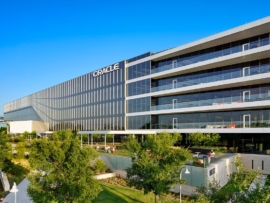 Source: Oracle
Oracle has landed a $300 billion OpenAI deal, among the largest in cloud history. The agreement, reported by The Wall Street Journal, will see OpenAI purchase computing power from Oracle over the next several years in a bet that could reshape the cloud market. The scale of the pact underscores both the opportunities and risks tied to the AI boom.
Agreement demands power equal to more than two Hoover Dams
Oracle disclosed that the OpenAI contract accounts for most of the $317 billion in new business it recently booked. The agreement is scheduled to start in 2027, with revenue increasing as more facilities come online.
To deliver the capacity, Oracle is working with data-center builder Crusoe and others, with sites planned in Wyoming, Texas, Michigan, Pennsylvania, and New Mexico.
OpenAI has folded the contract into its broader “Stargate” initiative, a brand created to encompass all of its data-center projects. Meeting the demands of the deal will require electricity equivalent to more than two Hoover Dams, according to the WSJ.
Contract demands billions before profits arrive
OpenAI reported earlier this year that it generates roughly $10 billion in annual revenue, a fraction of the $60 billion it will owe Oracle each year under the agreement. CEO Sam Altman has told investors the company does not expect to turn a profit until 2029, projecting $44 billion in losses before then.
Oracle, meanwhile, is tying a large share of its future growth to a single customer. To meet the demands of the deal, the company is expected to take on additional debt to acquire the specialized chips and build the infrastructure required. Its debt load already far exceeds that of rivals, with a debt-to-equity ratio more than ten times Microsoft’s.
Both sides are betting that the extraordinary scale of the contract will be matched by continued adoption of OpenAI’s technology worldwide. Until then, the billions required each year will weigh heavily on their balance sheets.
OpenAI breaks away from Microsoft lock-in
For years, Microsoft was OpenAI’s exclusive cloud provider. That arrangement ended earlier this year, clearing the way for OpenAI to sign the multi-billion-dollar contract with Oracle.
Microsoft is also branching out, moving to integrate Anthropic’s Claude into Office 365 after finding it stronger in tasks like Excel and PowerPoint. At the same time, its partnership with OpenAI has been tested by a contract clause that could restrict access to future models if artificial general intelligence is declared.
The dual shifts hint at a cooling relationship, though both sides publicly deny any rift.
Trillions in AI demand ignite cloud expansion race
Morgan Stanley estimates global outlays on chips, servers, and data centers will climb to nearly $3 trillion by 2028. The OpenAI-Oracle pact shows how quickly AI has become the engine of that growth, forcing major providers to speed up their expansion plans.
The record contract sets a new benchmark, indicating that trillion-dollar spending levels may be becoming the new baseline in the race to power AI.
As OpenAI scales up its cloud commitments, it is simultaneously facing a restructuring fight that has drawn lawsuits, regulators, and investor pressure.

Liz Ticong
Liz Ticong is a staff writer with more than 10 years of experience covering technology, software, and news. She’s written about AI, cybersecurity, data, and various software products for Datamation, Enterprise Networking Planet, and TechnologyAdvice.com, and has ghostwritten for international clients.