 1 month ago
55
1 month ago
55
Executive Summary
Insikt Group has been monitoring GrayCharlie, a threat actor overlapping with SmartApeSG and active since mid-2023, for some time, and is now publishing its first report on the group. GrayCharlie compromises WordPress sites and injects them with links to externally hosted JavaScript that redirects visitors to NetSupport RAT payloads delivered via fake browser update pages or ClickFix mechanisms. These infections often progress to the deployment of Stealc and SectopRAT. Insikt Group identified a large amount of infrastructure linked to GrayCharlie, primarily tied to MivoCloud and HZ Hosting Ltd. This includes NetSupport RAT command-and-control (C2) servers, both actor-controlled and compromised staging infrastructure, and higher-tier infrastructure used to administer operations. While most compromised websites appear to be opportunistic and span numerous industries, Insikt Group identified a cluster of United States (US) law firm sites that were likely compromised around November 2025, possibly through a supply-chain compromise involving a shared IT provider.
To protect against GrayCharlie, security defenders should block IP addresses and domains tied to associated remote access trojans (RATs) and infostealers, flag and potentially block connections to compromised websites, and deploy updated detection rules (YARA, Snort, Sigma) for current and historical infections. Other controls include implementing email filtering and data exfiltration monitoring. See the Mitigations section of this report for implementation guidance and Appendix A for a complete list of indicators of compromise (IoCs).
Key Findings
- GrayCharlie, which overlaps with SmartApeSG and first emerged in mid-2023, is a threat actor that injects links to externally hosted JavaScript into compromised WordPress sites. These links redirect victims to NetSupport RAT infections delivered via fake browser update pages or ClickFix techniques, ultimately resulting in Stealc and SectopRAT infections.
- Insikt Group identified a wide range of GrayCharlie infrastructure, largely associated with MivoCloud and HZ Hosting Ltd. This includes NetSupport RAT command-and-control (C2) servers, staging infrastructure made up of both actor-controlled and compromised infrastructure, as well as components of GrayCharlie’s higher-tier infrastructure used to manage its operations.
- Insikt Group identified two primary attack chains associated with GrayCharlie: one in which victims encounter fake browser update pages after visiting compromised websites, and another in which they are presented with a ClickFix pop-up, a technique that has become increasingly common in 2025.
Background
GrayCharlie is Insikt Group’s designation for a threat activity group that first appeared in mid-2023 and is behind SmartApeSG, also referred to as ZPHP or HANEYMANEY. The group’s operations typically involve injecting malicious JavaScript into legitimate but compromised WordPress sites. Visitors to these sites are shown convincing, browser-specific fake update prompts (such as for Chrome, Edge, or Firefox) that encourage them to download what appears to be an update but is actually malware.
In late March or early April 2025, SmartApeSG shifted from using fake browser updates to deploying ClickFix lures, mirroring a broader trend among threat actors of increasingly adopting ClickFix.
GrayCharlie predominantly delivers NetSupport RAT; however, deployments of Stealc and, more recently, SectopRAT, have been observed in rare instances. The group’s ultimate objectives remain uncertain. Current evidence suggests a focus on data theft and financial gain, with a theoretical, but unsubstantiated, possibility that it may sell or transfer access to other threat actors.
Threat Analysis
Insikt Group has been tracking GrayCharlie for an extended period and has observed the actor’s persistent behavior since its emergence in 2023. GrayCharlie continues to conduct the same types of operations, regularly deploying large volumes of new infrastructure and adhering to consistent tactics, techniques, and procedures (TTPs), including continued use of the same infection chains and NetSupport RAT payloads. The group targets organizations worldwide, with a particular focus on the US. The following sections provide a detailed examination of GrayCharlie’s operational infrastructure and its two primary attack chains.
Infrastructure Analysis
NetSupport RAT Clusters
Insikt Group identified two main NetSupport RAT clusters linked to GrayCharlie based on factors such as TLS certificates, NetSupport serial numbers and license keys, and the timing of the activity (see Figure 1). In addition, Insikt Group identified a range of other NetSupport RAT C2 servers linked to GrayCharlie activity, but which are not currently attributed to either of the two main clusters. Insikt Group assesses that these clusters may correspond either to different individuals associated with GrayCharlie or to distinct GrayCharlie campaigns. The clusters are further described below.
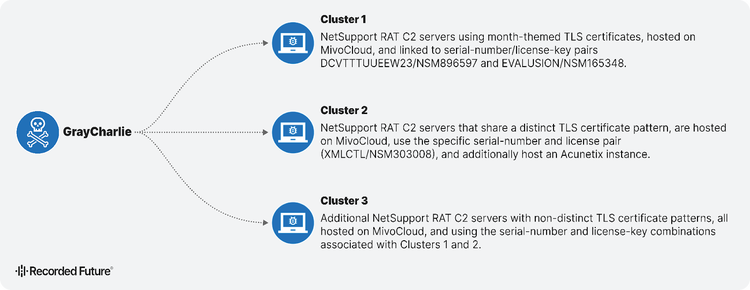
Figure 1: Overview of GrayCharlie clusters observed in 2025 (Source: Recorded Future)
Cluster 1
Cluster 1 comprises NetSupport RAT C2 servers whose TLS certificates display a recurring monthly naming pattern. All servers in this cluster are hosted by MivoCloud and were deployed between March and August 2025. Notably, NetSupport RAT samples associated with the cluster’s March and April infrastructure used the license key DCVTTTUUEEW23 and serial number NSM896597, before shifting to the license key EVALUSION and serial number NSM165348 in subsequent deployments. The C2 servers associated with this cluster are listed in Table 1.
IP Address
TLS Common Name
License Key
Serial Number
194[.]180[.]191[.]51
mar5
DCVTTTUUEEW23
NSM896597
194[.]180[.]191[.]168
mar4
DCVTTTUUEEW23
NSM896597
194[.]180[.]191[.]171
mar3
DCVTTTUUEEW23
NSM896597
5[.]181[.]159[.]60
mar1
DCVTTTUUEEW23
NSM896597
194[.]180[.]191[.]17
mar2
DCVTTTUUEEW23
NSM896597
94[.]158[.]245[.]66
apr2
DCVTTTUUEEW23
NSM896597
94[.]158[.]245[.]81
apr3
DCVTTTUUEEW23
NSM896597
185[.]225[.]17[.]74
apr4
DCVTTTUUEEW23
NSM896597
194[.]180[.]191[.]189
apr1
DCVTTTUUEEW23
NSM896597
5[.]252[.]178[.]123
may5
EVALUSION
NSM165348
94[.]158[.]245[.]104
may1
EVALUSION
NSM165348
94[.]158[.]245[.]115
may2
EVALUSION
NSM165348
94[.]158[.]245[.]118
may3
EVALUSION
NSM165348
94[.]158[.]245[.]131
may4
EVALUSION
NSM165348
94[.]158[.]245[.]137
may53
EVALUSION
NSM165348
94[.]158[.]245[.]13
june2
EVALUSION
NSM165348
94[.]158[.]245[.]174
june6
EVALUSION
NSM165348
94[.]158[.]245[.]140
june1
EVALUSION
NSM165348
185[.]163[.]45[.]30
june7
EVALUSION
NSM165348
94[.]158[.]245[.]63
june3
EVALUSION
NSM165348
94[.]158[.]245[.]111
june7
EVALUSION
NSM165348
94[.]158[.]245[.]135
june5ebatquot
EVALUSION
NSM165348
5[.]252[.]178[.]23
july9
EVALUSION
NSM165348
185[.]163[.]45[.]41
july1
EVALUSION
NSM165348
185[.]163[.]45[.]61
july3
EVALUSION
NSM165348
185[.]163[.]45[.]73
july4
EVALUSION
NSM165348
185[.]163[.]45[.]87
july6
EVALUSION
NSM165348
185[.]163[.]45[.]97
july8
EVALUSION
NSM165348
185[.]163[.]45[.]130
july9
EVALUSION
NSM165348
Table 1: NetSupport RAT C2 servers linked to Cluster 1 (Source: Recorded Future)
Notably, the NetSupport RAT C2 servers in Cluster 1 are connected not only through the characteristics previously described, but also by the near-simultaneous creation of their TLS certificates. For example, the TLS certificate with the common name june5ebatquot associated with IP address 94[.]158[.]245[.]135 was generated on June 30, 2025 at 4:55:20 PM, while the certificate with the common name june6 linked to 94[.]158[.]245[.]174 was created only 20 seconds later.
Cluster 2
Cluster 2 comprises NetSupport RAT command-and-control servers whose TLS certificates typically start with two or more repetitions of “s”, followed by an “i” and a number (so “sssi3”, for example). NetSupport RAT samples linked to Cluster 2 used the license key XMLCTL and serial number NSM303008. The NetSupport RAT C2 servers typically also host an instance of the vulnerability scanner Acunetix. The C2 servers associated with this cluster are listed in Table 2. Notably, all TLS certificates associated with this cluster were created in a single batch on June 17, 2025.
IP Address
TLS Common Name
License Key
Serial Number
5[.]181[.]159[.]112
sssi3
XMLCTL
NSM303008
5[.]181[.]159[.]9
ssi1
XMLCTL
NSM303008
5[.]181[.]159[.]38
sssi2
XMLCTL
NSM303008
5[.]181[.]159[.]140
ssssi6
XMLCTL
NSM303008
5[.]181[.]159[.]143
ssssi8
XMLCTL
NSM303008
5[.]181[.]159[.]142
sssssi7
XMLCTL
NSM303008
5[.]181[.]159[.]139
ssssi5
XMLCTL
NSM303008
Table 2: NetSupport RAT C2 servers linked to Cluster 2 (Source: Recorded Future)
Of note, one NetSupport RAT C2 server (94[.]158[.]245[.]56) used a TLS certificate with the common name 23sss, created in May 2025, and was linked to a NetSupport RAT sample that carried the same license key (EVALUSION) and serial number (NSM165348) previously observed in Cluster 1.
Other NetSupport RAT C2 Servers
Insikt Group identified an additional set of NetSupport RAT C2 servers linked to GrayCharlie that did not form a distinct cluster (see Table 3). However, all the servers were hosted by MivoCloud and were associated with NetSupport RAT samples using license key and serial number combinations observed in Clusters 1 and 2.
IP Address
TLS Common Name
License Key
Serial Number
5[.]181[.]159[.]29
ssdecservicsdes
N/A
N/A
194[.]180[.]191[.]18
papichssd2
DCVTTTUUEEW2
NSM896597
94[.]158[.]245[.]153
kosmo2
XMLCTL
NSM303008
94[.]158[.]245[.]170
normvork
XMLCTL
NSM303008
5[.]181[.]159[.]62
ffdds
DCVTTTUUEEW23
NSM896597
5[.]181[.]156[.]234
wedn1
XMLCTL
NSM303008
5[.]252[.]178[.]35
scgs234123
XMLCTL
NSM303008
194[.]180[.]191[.]209
novemsdf
XMLCTL
NSM303008
5[.]181[.]156[.]244
wends4
XMLCTL
NSM303008
194[.]180[.]191[.]121
novaksuur
EVALUSION
NSM165348
5[.]252[.]177[.]120
lohsd
XMLCTL
NSM303008
5[.]252[.]177[.]15
bounce
XMLCTL
NSM303008
185[.]163[.]45[.]16
update1
XMLCTL
NSM303008
Table 3: Additional NetSupport RAT C2 servers linked to GrayBravo (Source: Recorded Future)
Staging Infrastructure
Once GrayCharlie victims land on the compromised WordPress sites, thereby satisfying the conditional logic, the payload is typically fetched from the attacker-controlled infrastructure and injected into the compromised WordPress sites. Insikt Group has identified two distinct types of staging infrastructure, each characterized by different website templates. Type 1 is modeled after “Wiser University,” and Type 2 is modeled after “Activitar.”
Type 1: “Wiser University”
The IP addresses associated with the Type 1 staging infrastructure are linked to websites impersonating “Wiser University” (see Figure 2), a fictional entity used to demonstrate Wiser, a free Bootstrap HTML5 education website template for school, college, and university websites. (As a sidenote, Oreshnik is the name of a Russian intermediate-range ballistic missile reportedly capable of speeds exceeding Mach 10.) Appendix B lists the IP addresses associated with the Type 1 staging infrastructure. All IP addresses, except for one, are announced by AS202015 (HZ Hosting Ltd).

Figure 2: Website impersonating “Wiser University” (Source: Recorded Future)
Suspected Testing Infrastructure
Although most IP addresses associated with the Type 1 staging infrastructure are announced by AS202015, as shown in Appendix B, Insikt Group also identified a small subset announced by other ASNs that host the same websites (see Table 4). On average, approximately one such IP address appears to be established each month. Notably, most of these IP addresses appear to geolocate to Russia, and the same ASNs are consistently reused within the same timeframe.
IP Address
ASN
Country
Date of Emergence
89[.]253[.]222[.]25
AS41535
RU
2025-08-29
89[.]253[.]222[.]156
AS41535
RU
2025-08-26
89[.]169[.]12[.]48
AS207957
GB
2025-07-08
185[.]231[.]245[.]158
AS202984
RU
2025-06-27
95[.]182[.]123[.]86
AS202984
RU
2025-05-19
23[.]140[.]40[.]66
AS61400
RU
2025-04-11
217[.]114[.]15[.]253
AS198610
RU
2025-04-09
45[.]153[.]191[.]245
AS198610
RU
2025-03-21
46[.]29[.]163[.]28
AS51659
RU
2025-02-06
Table 4: Additional infrastructure possibly linked to GrayCharlie (Source: Recorded Future)
Type 2: “Activitar”
Insikt Group identified an additional set of staging infrastructure, referred to as “Type 2.” The IP addresses in this cluster commonly host specific websites (see Figure 3). Insikt Group assesses that this template was sourced elsewhere and is not unique to GrayCharlie.

Figure 3: Website impersonating “Activitar” (Source: Recorded Future)
A subset of domains and IP addresses associated with Type 2 is presented in Table 5. Notably, most of the IP addresses are also announced by AS202015 (HZ Hosting Ltd), and one domain in Table 5, filmlerzltyazilimsx[.]shop, is linked to the email address oreshnik[@]mailum[.]com through its WHOIS record.
filmlerzltyazilimsx[.]shop
79[.]141[.]163[.]169
AS202015
foolowme[.]com
144[.]172[.]115[.]211
AS14956
joiner[.]best
79[.]141[.]162[.]135
AS202015
lowi1[.]com
185[.]33[.]86[.]11
AS202015
morniksell[.]com
172[.]86[.]90[.]84
AS14956
persistancejs[.]store
185[.]80[.]53[.]79
AS59711
pomofight[.]com
45[.]61[.]134[.]76
AS14956
port4loms[.]com
194[.]15[.]216[.]118
AS197155
signaturepl[.]com
77[.]83[.]199[.]162
AS202015
yungask[.]com
91[.]193[.]19[.]220
AS202015
Table 5: Domains and IP addresses linked to Type 2 staging infrastructure (Source: Recorded Future)
Compromised Infrastructure
GrayCharlie commonly injects malicious scripts into the Document Object Model (DOM) of compromised WordPress sites using script tags. Insikt Group has identified several recurring URL patterns tied to this activity: some URLs load externally hosted JavaScript files (such as hxxps://joiner[.]best/work/original[.]js), while others call a PHP file on specific endpoints using an ID parameter (such as hxxps://signaturepl[.]com/work/index[.]php?abje2LAw). Notably, these URLs are updated over time by the threat actor, complicating detection and indicating the threat actor maintains ongoing access to a large pool of compromised WordPress installations. Appendix A lists a subset of WordPress websites infected by GrayCharlie.
Although the exact initial access vector is unknown, it is likely that the actors either purchase access, such as via malware logs containing WordPress admin credentials, or exploit vulnerable WordPress plugins. The latter remains the most frequent cause of all WordPress compromises.
Suspected Compromise of “Law Firm Acceleration Company” SMB Team
While the GrayCharlie-linked compromised WordPress sites span a wide range of industry verticals, in a few rare instances, the threat actors appear to have obtained, either through their own intrusions or via a third party, a more targeted set of WordPress domains. Specifically, at least fifteen websites belonging to US law firms were observed loading the external JavaScript hosted at hxxps://persistancejs[.]store/work/original[.]js (see Table 6).
Insikt Group assesses that GrayCharlie (or the third party GrayCharlie works with) likely compromised these websites through a supply-chain vector. One potential avenue is SMB Team, the self-described “fastest-growing law firm acceleration company,” which has supported thousands of firms across North America, according to its website, as its logo and other references appear across many of the websites listed in Table 6 (see Figure 4). Notably, credentials associated with an SMB Team email address used for a WordPress hosting platform surfaced around the same time that the domain persistancejs[.]store first began resolving. This temporal overlap suggests that the threat actors may have gained access to SMB Team-related infrastructure through the use of legitimate, compromised credentials.
Domain
Company
Country
SMB Team
bianchilawgroup[.]com
Bianchi Law Group
US
Yes
brattonlawgroup[.]com
Bratton Law Group
US
Yes
brighterdaylaw[.]com
Brighter Day Law
US
N/A
defensegroup[.]com
The Defense Group
US
Yes
dwicriminallawcenter[.]com
Benjamin Law Firm LLC
US
Yes
fisherstonelaw[.]com
Fisher Stone, P.C.
US
Yes
jarrettfirm[.]com
Jarrett & Price LLC
US
Yes
raineyandrainey[.]com
Rainey & Rainey Attorneys At Law PLLC
US
Yes
rbbfirm[.]com
Buchanan Law Group
US
Yes
rmvlawyer[.]com
The Law Office of Brian Simoneau, P.C.
US
Yes
www[.]brentadams[.]com
Brent Adams & Associates
US
Yes
www[.]cfblaw[.]com
Cohen Forman Barone, PC
US
Yes
www[.]gerlinglaw[.]com
Gerling Law Injury Attorneys
US
Yes
www[.]immigration-defense[.]com
Law Offices of Daniel Shanfield
US
Yes
www[.]schwartzandschwartz[.]com
Schwartz & Schwartz Attorneys at Law, P.A.
US
N/A
Table 6: Compromised law firm websites linked to GrayCharlie (Source: Recorded Future)
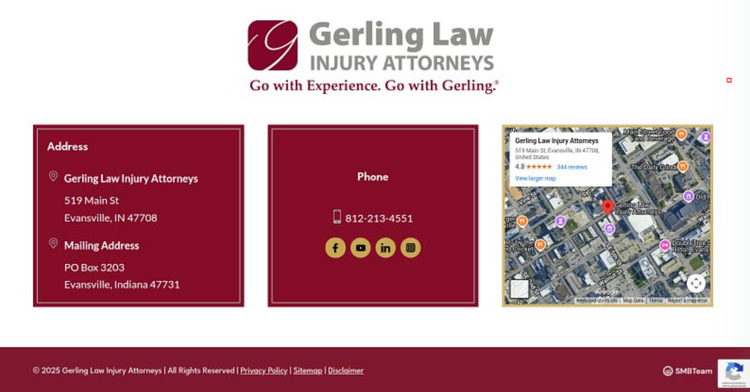

Figure 4: Website of Gerling Law Injury Attorneys (top) and SMBTeam logo (bottom) (Source: URLScan)
Notably, while an SMB Team compromise is possible, Insikt Group also assesses that the actors may have exploited a specific version of WordPress or its plugins used by SMB Team, which could explain the simultaneous compromise of all affected websites.
In some instances, the same compromised WordPress sites are compromised by multiple threat actors simultaneously. For example, bianchilawgroup[.]com was also breached by TAG-124 (also known as LandUpdate808 or Kongtuke) since at least December 2025, which used the domain vimsltd[.]com.
Higher-Tier Analysis
GrayCharlie administers its staging infrastructure primarily over SSH, though other ports are used intermittently. The group manages its NetSupport RAT C2 servers over TCP port 443. Overall, Insikt Group assesses that GrayCharlie relies extensively on proxy services to administer its infrastructure. Additionally, based on presumed browsing activity from higher-tier servers, at least some individuals linked to GrayCharlie are assessed to be Russian-speaking.
Attack-Chain Analysis
GrayCharlie has been observed using two different attack chains to deliver NetSupport RAT. The first chain uses compromised websites to distribute a fake browser update that triggers the retrieval and installation of a script-based payload; the second chain uses compromised WordPress sites and a ClickFix-style lure that copies a command to fetch and install the RAT. Both culminate in NetSupport execution from %AppData%, Registry Run key persistence, and C2 connectivity; the technical details are expanded below.
Attack Chain 1: Fake Browser Update Leading to NetSupport RAT
According to public reporting, when GrayCharlie first became active in mid-2023, it relied on fake browser updates to deliver the NetSupport RAT. Although the group later shifted to the ClickFix technique, Insikt Group observed a return to fake browser updates as early as October 12, 2025. Figure 5 provides an overview of Attack Chain 1.
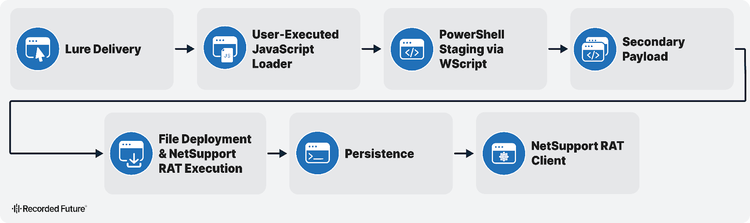
Figure 5: Attack Chain 1 (Source: Recorded Future)
- Website compromise and lure delivery. Threat actors modify legitimate sites to load malicious scripts that render a browser-specific “update” prompt. Selecting the prompt initiates download of a ZIP “update” package containing a primary JavaScript file alongside decoy .dat files.
- User-executed JavaScript loader. The victim manually runs the .js script. The script mimics a benign browser component to reduce suspicion while silently initiating the next stage of the attack.
- PowerShell staging via WScript. The JavaScript launches wscript.exe, which spawns powershell.exe. PowerShell reaches out to a remote host to fetch an obfuscated JavaScript containing encoded tasking.
- Secondary payload retrieval. PowerShell decodes instructions and downloads the actual payload ZIP archive. This archive contains a complete NetSupport RAT client set, including client32.exe and required DLLs.
- File deployment and execution. The archive is extracted under the user profile (for example, %AppData%\Roaming\...). client32.exe is started in the background to minimize visible indicators to the user.
- Persistence establishment. A Windows Run registry key is created to automatically launch client32.exe at logon, ensuring the NetSupport RAT remains active after reboots without requiring further user interaction.
- C2 readiness. With the NetSupport RAT client running on the infected host, the endpoint is prepared to establish command-and-control connectivity with the attacker's infrastructure.
Attack Chain 2: WordPress Redirects and ClickFix Leading to NetSupport RAT
As early as April 2025, GrayCharlie began using ClickFix as a secondary attack chain, consistent with industry reporting that many threat actors have adopted ClickFix techniques due to their effectiveness. Figure 6 provides an overview of Attack Chain 2.
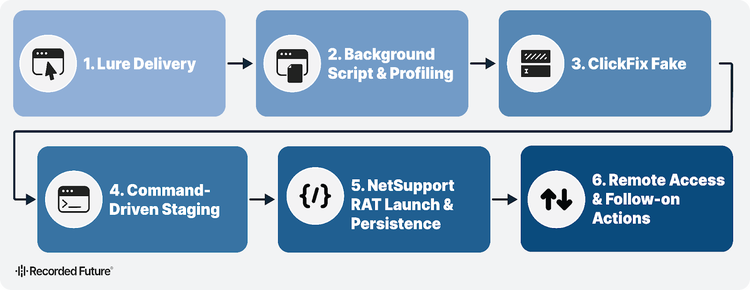
Figure 6: Attack Chain 2 (Source: Recorded Future)
- Initial delivery and redirection. Phishing emails, malicious PDFs, or links on gaming sites direct users to compromised WordPress pages that embed attacker JavaScript.
- Background script and profiling. A background script loads when the site is visited, injects an iframe, and profiles the environment (such as the operating system and browser) to deliver the next stage.
- ClickFix fake CAPTCHA. The page presents a fake CAPTCHA that quietly copies a malicious command to the user’s clipboard and instructs them to paste it into the Windows Run dialog (Win+R), turning social engineering into user-assisted execution (see Figure 7).
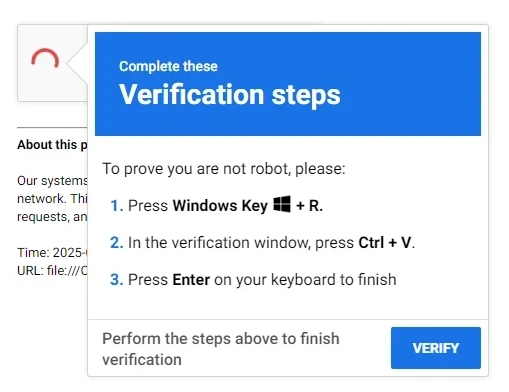
Figure 7: Fake Captcha (Source: Elastic)
- Command-driven staging. The pasted command retrieves a batch file that downloads a ZIP containing NetSupport RAT and uses PowerShell to extract it into %AppData%\Roaming\ (see Figure 8).
powershell -Win^dow Style Hidden -Command "Add-Type -AssemblyName 'System. IO.Compression FileSystem'; [IO.Compression.ZipFile]::ExtractToDirectory('!CF0JOAXML!','!WFHEYHKMZ!')"
Figure 8: PowerShell command (Source: Cybereason)
- NetSupport RAT launch and persistence. The batch file starts client32.exe and sets a Run registry key to automatically relaunch the NetSupport RAT client at startup, establishing persistence on the endpoint.
- Remote access and follow-on actions. Once connected to C2, operators can interact with the system, perform reconnaissance (for example, domain group membership queries), transfer files, execute additional commands, and potentially move laterally using access acquired from the host.
Observed Operator Activity
In October 2025, Insikt Group detonated a NetSupport RAT sample (SHA256: 31804c48f9294c9fa7c165c89e487bfbebeda6daf3244ad30b93122bf933c79c) with the C2 server 5[.]181[.]156[.]234[:]443 linked to GrayCharlie within a controlled environment. Later that day, approximately three hours later, the threat actor connected using NetSupport RAT, compressed and moved two files, and then executed group and account reconnaissance commands. The same actor returned three days later and repeated the previously observed reconnaissance commands (see Figure 9).
Figure 9: Reconnaissance commands (Source: Recorded Future)
When both files were compressed into a single ZIP archive and the executable was detonated, the process sideloaded a DLL identified as Sectop RAT (SHA256: 59e7e7698d77531bfbfea4739d29c14e188b5d3109f63881b9bcc87c72e9de78) with the C2 server 85[.]158[.]110[.]179[:]15847. The executable (SHA256: 5f1bd92ad6edea67762c7101cb810dc28fd861f7b8c62e6459226b7ea54e1428) was identified as “Merge XML Files”, version 1.2.0.0, developed by Vovsoft, and was signed with a digital certificate that expired on October 31, 2025.
Mitigations
- Leverage the IoCs in Appendix A and Appendix B to investigate potential past or ongoing infections, both successful and attempted; Recorded Future customers can use the Recorded Future Intelligence Operations Platform to monitor for future IoCs associated with GrayCharlie.
- Monitor for validated infrastructure associated with the malware families discussed in this report, including NetSupport RAT and Stealc, as well as numerous others identified and validated by Insikt Group, and integrate these indicators into relevant detection and monitoring systems.
- Leverage the Sigma, YARA, and Snort rules provided in Appendices D, E, and F in your security information and event management (SIEM) or endpoint detection and response (EDR) tools to detect the presence or execution of NetSupport RAT. Customers can use additional detection rules available in the Recorded Future Intelligence Operations Platform.
- Use Recorded Future Network Intelligence to detect instances of data exfiltration from your corporate infrastructure to known malicious infrastructure.
- Use the Recorded Future Intelligence Operations Platform to monitor GrayCharlie, other threat actors, and the broader cybercriminal ecosystem, ensuring visibility into the latest tactics, techniques, and procedures (TTPs), preferred tools and services (for example, specific threat activity enablers [TAEs] used by threat actors), and emerging developments.
- Use Recorded Future AI’s reporting feature to generate tailored reports on topics that matter to your company. For example, if you want to stay informed about activities related to GrayCharlie, you can receive regular AI-generated updates on this threat actor.
Outlook
GrayCharlie has been operating for more than two years, and despite shifts in its tactics, such as alternating between fake updates and ClickFix techniques or transitioning from SmartApe to other hosting providers like MivoCloud, the group’s core behaviors have remained consistent. Given its sustained activity, GrayCharlie is highly likely to remain active and continue targeting organizations worldwide, with a current emphasis on US entities, as indicated by Recorded Future Network Intelligence.
Insikt Group will continue to closely monitor GrayCharlie to detect emerging threats and evaluate the group’s strategic direction within the broader cybercriminal ecosystem.